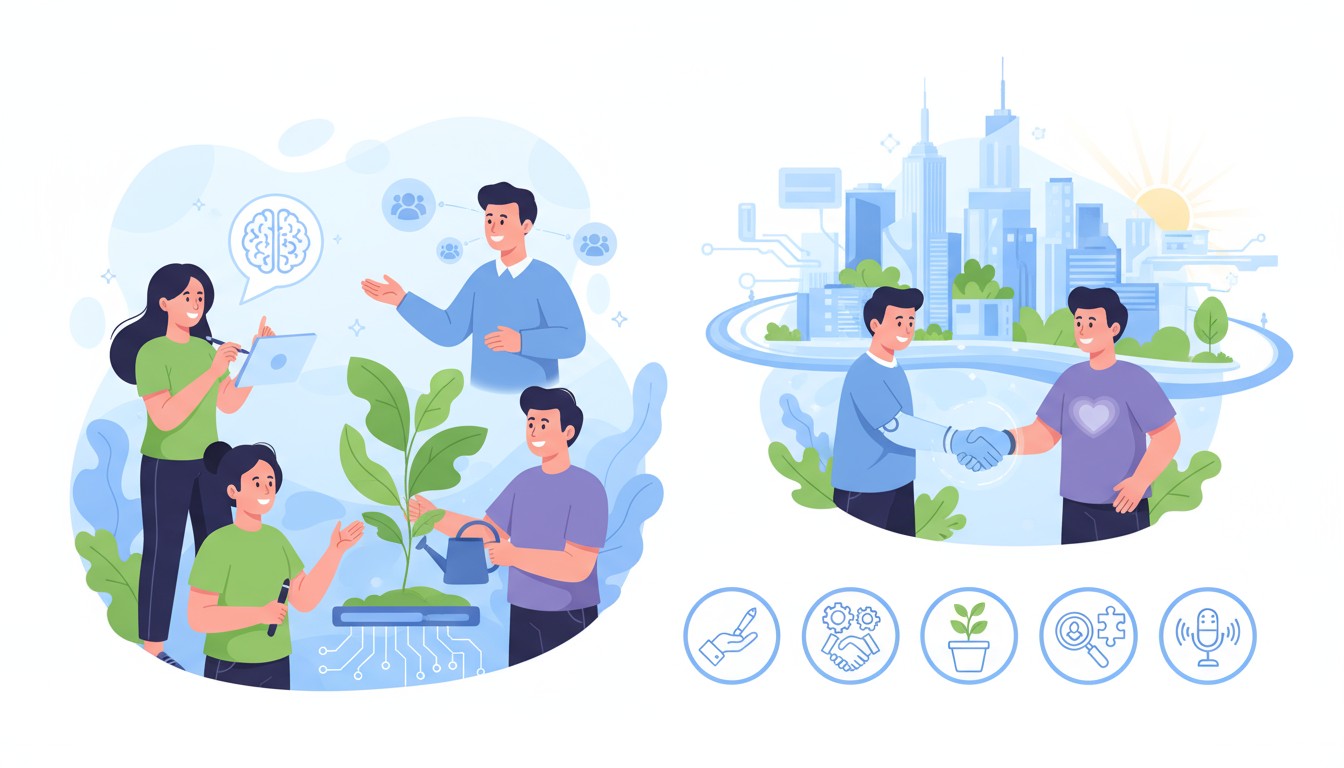
When you hear predictions that artificial intelligence will automate substantial portions of professional services work within the next decade, the natural reaction involves anxiety about whether your career faces obsolescence as machines increasingly perform tasks that currently justify your fees and that you spent years developing expertise to execute competently. This concern reflects genuine reality about how AI automation has already transformed certain professional services domains by making previously time-consuming analytical work nearly instantaneous, enabling clients to generate adequate outputs without purchasing expensive human expertise, and generally commoditizing capabilities that once represented defensible competitive advantages requiring years of training to develop. However, this focus on what AI can now do obscures equally important recognition of what remains distinctively human about the most valuable professional services, the specific dimensions of client work that automation fundamentally cannot replicate because they depend on human qualities that transcend information processing or pattern recognition that algorithms excel at performing.
Let me guide you through understanding which aspects of professional services work face genuine automation risk versus which dimensions remain fundamentally protected by human capabilities that current and foreseeable AI cannot replicate regardless of technological advancement. We will explore why the analytical and production work that consumed substantial professional time historically proves most vulnerable to automation while the judgment, relationship, and facilitation work that clients value most highly remains distinctively human in ways that create opportunities for professionals who deliberately orient their practices toward these automation-resistant dimensions. We will examine what specific human capabilities like contextual judgment, emotional attunement, trust building, and ethical reasoning represent fundamental limitations of current AI approaches rather than just temporary technical challenges that future algorithms will eventually overcome. We will discuss how to restructure your service offerings to emphasize the irreplaceable human dimensions while leveraging AI as a tool that amplifies your effectiveness rather than viewing automation as a threat that will inevitably eliminate your relevance. My goal involves helping you see AI automation not as an existential threat requiring defensive responses but as a transformation that creates opportunities for professionals who understand which aspects of their work to protect and emphasize versus which dimensions to gladly delegate to tools that perform them faster and often better than humans ever could.
Understanding What AI Actually Does Well Versus Human Strengths
Think about what capabilities make AI systems effective at the tasks they have successfully automated across professional services and other knowledge work domains. Artificial intelligence excels at pattern recognition within large datasets, identifying correlations and regularities that humans might miss through the sheer computational power that allows algorithms to process millions of examples and extract statistical patterns that predict outcomes based on observable features. When you feed an AI system thousands of previous market research reports along with the data and context that informed them, the system learns patterns connecting certain market conditions to specific analytical frameworks and recommendation structures, allowing it to generate new reports that follow those established patterns when presented with similar market data. This pattern matching capability represents genuine strength that makes AI extraordinarily effective for tasks where the right approach can be determined by recognizing which previous situation most closely resembles the current one.
However, think about what this pattern recognition strength reveals about fundamental AI limitations. When situations require genuine creativity to develop novel approaches that no previous example anticipated, or when context includes subtle factors that available data cannot capture adequately, or when the right answer depends on values and priorities that cannot be objectively determined through pattern analysis, AI systems struggle or fail completely because their core capability involves recognizing and applying patterns rather than creating fundamentally new solutions or making judgment calls that transcend data-driven analysis. The research on AI capabilities and limitations from Harvard Business Review demonstrates that current AI approaches succeed at tasks involving clear patterns in abundant data but fail at tasks requiring contextual judgment about unprecedented situations, ethical reasoning about competing values, or creative synthesis that connects disparate concepts in ways that no training data demonstrated.
The distinction between routine expertise and adaptive expertise helps clarify which professional capabilities face automation risk versus which remain distinctively human. Routine expertise involves applying established frameworks and procedures to situations that fit recognizable patterns, like tax preparation where you identify which regulations apply to specific circumstances then perform calculations following predetermined rules, or financial modeling where you structure analyses using established templates then populate them with client data. Think about how these routine applications of expertise depend primarily on information processing rather than on judgment or creativity, making them vulnerable to automation by AI systems that can learn patterns connecting situations to appropriate frameworks then execute those frameworks faster and often more accurately than humans performing the same tasks manually. When professional work consists primarily of routine expertise application, automation represents genuine threat because machines can perform those tasks at least as well as humans while doing so far more quickly and cheaply.
However, adaptive expertise involves recognizing when established approaches do not fit current situations well, improvising solutions that combine familiar concepts in novel ways appropriate to unique circumstances, and generally applying professional knowledge flexibly rather than just executing learned procedures mechanically. When you work with a client whose organizational context presents challenges that do not map neatly onto any framework you learned, adaptive expertise allows you to synthesize relevant principles from multiple domains and create a customized approach specifically designed for their situation rather than forcing their circumstances into predetermined categories that simplify analysis but ignore crucial context that determines whether recommendations will actually work. Think about how this creative synthesis requires the kind of flexible intelligence that current AI fundamentally lacks because algorithms excel at recognizing patterns within their training data but struggle to transfer knowledge across domains or generate truly novel solutions that no previous example demonstrated, making adaptive expertise far more automation-resistant than routine expertise despite both representing legitimate professional knowledge.
The Human Judgment That Contextual Complexity Requires
When clients hire professional service providers, the analytical work that produces reports, models, or recommendations often represents just the visible output while the more valuable but less tangible service involves the judgment that determines which analytical approaches suit particular client contexts, how to interpret results given the specific organizational and market realities that formal analysis cannot fully capture, and what recommendations will actually prove implementable given political, cultural, and resource constraints that abstract problem-solving ignores. Think about what happens when you present strategic recommendations to a client leadership team. The specific strategies you recommend may be analytically sound based on the competitive analysis and financial modeling that informed them, but whether those strategies represent good advice depends enormously on factors like the CEO’s risk tolerance, the organization’s capacity for change given their recent history and current culture, the political dynamics among executives that will affect implementation support, and countless other contextual factors that no amount of data collection could comprehensively capture for algorithmic analysis.
The judgment required to navigate this contextual complexity remains distinctively human because it depends on the kind of holistic situation assessment that integrates countless subtle cues from direct interactions with client stakeholders, from your accumulated experience recognizing patterns across diverse previous situations that inform your intuition about what will work in this case, and from your ability to empathize with stakeholder perspectives sufficiently to anticipate how they will react to different approaches. When you sit in meetings observing how executives interact, noticing who defers to whom and whose ideas get dismissed versus who commands attention, reading body language that reveals genuine enthusiasm versus polite skepticism, and generally absorbing the social dynamics that formal organization charts never reveal, you develop understanding of the political reality that determines which analytically sound recommendations will actually get implemented versus which will face resistance that prevents execution regardless of their technical merit. Think about how AI systems would struggle to develop equivalent contextual understanding because the relevant signals involve subtle interpersonal dynamics that occur during in-person interactions rather than in the data that algorithms can process, and because interpreting these signals requires the kind of social intelligence that humans develop through lifelong experience navigating complex human relationships but that current AI approaches cannot replicate.
The insights from McKinsey on automation potential across different work activities demonstrate that tasks requiring contextual judgment about ambiguous situations show minimal automation potential even with aggressive assumptions about future AI advancement, because the judgment involves synthesizing information from diverse sources including tacit knowledge from experience, reading social cues from direct interaction, and making values-based tradeoffs between competing priorities that cannot be resolved through pure data analysis. When you advise clients about whether to pursue aggressive growth strategies that might jeopardize short-term profitability, you make recommendations that depend partly on financial analysis that AI could perform but primarily on your judgment about whether this particular leadership team has the risk tolerance and patience to weather the near-term challenges that growth investments create before benefits materialize, whether their board will remain supportive during difficult periods, and whether their organizational culture can execute the operational changes that growth requires. This judgment draws from your experience pattern-matching their situation to previous clients who succeeded or struggled with similar strategic choices, but it also requires the empathetic understanding of their specific personalities, constraints, and capabilities that only direct human interaction provides.
Think about how to position your services around the judgment and contextual understanding that automation cannot provide rather than emphasizing the analytical work that AI increasingly performs adequately or even better than humans. When clients engage you, they should understand clearly that your value comes primarily from helping them navigate the contextual complexity and ambiguity that their situations involve rather than from performing analysis that they could increasingly generate through AI tools. You can explain that while algorithms can identify patterns in market data and generate recommendations based on those patterns, only human judgment can assess whether those algorithmically generated recommendations make sense given the specific organizational and competitive realities that their particular situation involves. You can demonstrate through examples how your contextual understanding allowed you to recognize when apparently optimal strategies would have failed due to implementation challenges that formal analysis missed, saving clients from pursuing approaches that looked good on paper but would have produced disappointing results because they ignored crucial context about organizational capabilities or market dynamics that only experienced human judgment could properly weigh.
The Relationship Work That Trust and Influence Depend Upon
When you examine which professional service engagements clients valued most highly and generated the strongest relationships leading to years of continued work and enthusiastic referrals, you typically discover that analytical quality mattered far less than the trust and rapport that developed through how you showed up during difficult conversations, supported clients emotionally during stressful transformations, facilitated productive discussions among conflicting stakeholders, and generally provided the human presence that made clients feel genuinely cared for rather than just competently served. Think about a situation where you helped a client navigate a significant organizational change like a restructuring, merger integration, or leadership transition. The analytical frameworks you provided about change management best practices probably helped them think through the transformation systematically, but what they remember most and what made them trust you enough to rely on you during subsequent challenges was how you remained steady and supportive when they felt overwhelmed, how you listened empathetically when they needed to process their anxieties, and how you helped them find courage to make difficult decisions by validating their concerns while also holding them accountable to moving forward despite discomfort.
This relationship dimension of professional services proves fundamentally automation-resistant because it depends on authenticity, emotional attunement, and genuine care that clients can distinguish from the simulated empathy that even sophisticated AI might eventually approximate through learning to recognize and respond to emotional cues appropriately. When clients face genuinely difficult situations where outcomes matter enormously to their careers and livelihoods, they seek human advisors who they trust will prioritize their interests authentically rather than just optimizing for whatever algorithmic objective function guides machine recommendations. Think about how different it feels to receive strategic advice from a human advisor who you know has your best interests at heart based on years of relationship that demonstrated their genuine commitment to your success, compared to receiving equivalent analytical recommendations from an AI system that may be technically correct but cannot care about you as a person or feel genuine concern about whether its recommendations work out well for you specifically versus just performing adequately on average across many similar situations.
The influence work involved in helping clients actually implement recommendations represents another distinctively human dimension that automation cannot replicate because it requires the kind of social and emotional intelligence that allows you to navigate organizational politics, build coalitions among stakeholders with competing interests, frame messages in ways that resonate with specific audiences, and generally facilitate the human interactions that determine whether analytically sound strategies get executed or die through passive resistance from people who were never genuinely convinced to support changes they did not feel consulted about appropriately. When you work with clients on change initiatives, the analytical design of new processes or organizational structures often proves straightforward compared to the challenging work of helping leaders communicate changes persuasively, managing stakeholder resistance through patient listening and genuine engagement rather than through coercive mandates, and building the trust and momentum that allow transformations to succeed despite the inevitable difficulties that emerge during implementation. The research from Forbes on irreplaceable human capabilities emphasizes that this facilitation and influence work depends on emotional intelligence, authentic relationship building, and contextual social judgment that current AI fundamentally lacks despite algorithms becoming increasingly sophisticated at technical tasks.
Think about how to structure your service offerings to emphasize the relationship and facilitation work that creates the most client value while positioning analytical work as supporting rather than defining your primary value proposition. When clients engage you, they should understand clearly that you provide strategic partnership involving genuine care about their success rather than just technical expertise about solving business problems analytically. You can explain that while AI tools can generate analytical insights about what actions might improve their business performance, only human advisors can help them navigate the organizational and interpersonal challenges involved in actually getting those actions implemented effectively through building stakeholder buy-in, managing resistance, and maintaining momentum during difficult implementation periods. You can demonstrate through examples how your relationship-based approach allowed you to remain trusted advisor throughout multi-year transformations because clients knew you genuinely cared about their success beyond just delivering contracted services, creating the kind of deep partnership that generates the referrals, retention, and premium pricing that purely transactional analytical work could never sustain regardless of technical quality.
The Ethical Reasoning That Values Conflicts Require
When professional service situations involve competing stakeholder interests, ethical dilemmas about appropriate courses of action, or values-based tradeoffs between efficiency and fairness, analytical optimization approaches that AI excels at performing cannot resolve the fundamental questions about what goals should be pursued and whose interests should receive priority when perfect alignment proves impossible. Think about situations where you helped clients navigate ethically complex decisions like workforce reductions required for financial viability but affecting loyal long-tenured employees, strategic pivots benefiting shareholders but potentially harming other stakeholders like customers or communities, or governance choices involving tradeoffs between aggressive growth pursuing maximum returns versus more conservative approaches prioritizing sustainability and stakeholder welfare. These situations require judgment about values and priorities that cannot be determined through data analysis or pattern recognition because reasonable people disagree about the right answers based on their differing ethical frameworks and stakeholder commitments.
The distinctively human capability for ethical reasoning involves not just identifying that values conflicts exist but helping clients think through the implications of different choices for various stakeholders, articulating the principles that might guide decisions when perfect solutions do not exist, and supporting clients in making values-aligned choices even when those choices involve genuine costs that pure optimization would reject as inefficient. When you help clients navigate these ethically complex situations, you bring not just analytical clarity about tradeoffs but also the moral reasoning that helps them act consistently with their values even when expedient alternatives might produce better financial outcomes. Think about how AI systems struggle with ethical reasoning because algorithms optimize for defined objective functions rather than wrestling with the kind of values pluralism that characterizes real ethical dilemmas where legitimate principles conflict and where the right answer depends on moral commitments that data cannot determine. An algorithm can calculate that workforce reductions would improve profitability by a certain percentage, but it cannot make the judgment about whether that financial benefit justifies the human costs to affected employees and their communities, because that judgment requires ethical reasoning about values that transcend the quantitative optimization that AI performs.
The importance of ethical reasoning in professional services will likely increase as AI automation handles more routine analytical work, because the remaining distinctively human professional contribution increasingly involves helping clients navigate the values dimensions of their decisions rather than just optimizing outcomes according to preset objectives. The insights from MIT Sloan Management Review on AI ethics suggest that as algorithmic decision-making becomes more prevalent, human judgment about when to override algorithmic recommendations based on ethical considerations, how to ensure that optimization does not sacrifice important values for marginal efficiency gains, and generally what guardrails should govern AI use becomes increasingly critical for responsible organizational leadership. When you position yourself as helping clients think through these ethical dimensions rather than just providing technical analysis, you orient your practice toward work that cannot be automated because it requires the kind of moral reasoning that remains distinctively human.
Think about how to develop and articulate your capabilities around ethical reasoning and values-based counseling that complement rather than compete with AI analytical tools. You can explain to clients that as they increasingly use AI for data analysis and pattern recognition, they will face growing needs for advisors who help them interpret what those algorithmic insights mean for their values commitments and stakeholder responsibilities. You can demonstrate through examples how you helped previous clients make values-aligned decisions in situations where pure optimization would have recommended different actions that felt ethically problematic despite their technical efficiency. You can position yourself as the human judgment layer that ensures AI-generated recommendations get evaluated against ethical considerations that algorithms cannot assess, creating a complementary relationship where you leverage AI capabilities while providing the distinctively human oversight that responsible AI use requires.
Restructuring Services to Leverage AI While Emphasizing Human Value
Rather than viewing AI automation as threat requiring defensive responses where you attempt to protect analytical work from being commoditized by arguing that human analysis remains superior despite evidence suggesting AI performs many analytical tasks at least adequately, the more productive strategic response involves enthusiastically adopting AI tools to handle routine analytical work while deliberately restructuring your service offerings to emphasize the distinctively human dimensions that create the most client value and that automation cannot replicate. Think about how this reorientation changes your value proposition from emphasizing your analytical capabilities to positioning yourself as providing strategic judgment, relationship partnership, and ethical guidance that complement the analytical insights that AI tools increasingly generate efficiently. When clients can use AI to produce market research reports, financial models, or strategic frameworks quickly and cheaply, you offer to help them interpret those AI-generated outputs given their specific context, facilitate the stakeholder conversations required to build buy-in for recommendations, and generally provide the human judgment and relationship support that determines whether analytically sound strategies actually succeed.
The time savings that AI tools provide for routine analytical work creates opportunities to invest more attention in the relationship and judgment work that clients value most highly but that you previously had insufficient time to emphasize when analytical production consumed most engagement hours. When AI generates a financial model in minutes that previously required several hours of careful Excel work, you can redirect those hours toward deeper conversations with client stakeholders understanding their concerns and priorities, more thorough assessment of organizational dynamics affecting implementation feasibility, and generally the contextual understanding that makes your recommendations far more valuable than generic AI outputs that lack the customization that specific client situations require. Think about how this creates win-win dynamics where clients benefit from faster analytical turnaround while receiving more of the human attention they actually value most, and you benefit from focusing on the work you probably find more intellectually satisfying and that creates stronger client relationships compared to the routine analytical production that felt necessary but rarely generated the deep satisfaction that comes from genuinely helping clients through difficult challenges.
The pricing conversations change when you reorient services toward human judgment and relationship value rather than analytical production, because you can justify premium pricing based on outcomes and relationship value rather than on hours invested in analytical work that clients increasingly recognize they could generate more cheaply through AI tools. When you price engagements based on the strategic value of your judgment about which AI-generated analytical approaches suit specific client contexts, the relationship value from having a trusted advisor who genuinely knows their business and cares about their success, and the facilitation value from helping them navigate organizational dynamics that determine implementation success, clients perceive clear value justifying premium fees despite your investment of fewer total hours compared to traditional analytical engagements that billed for extensive time producing outputs that AI now generates rapidly. The guidance from business strategy experts on adapting to AI emphasizes that professionals who successfully navigate AI disruption shift from charging for information processing or analytical production toward charging for judgment, relationships, and outcomes that represent distinctively human value that clients cannot obtain from algorithmic tools regardless of how sophisticated they become.
Think about how to communicate this value reorientation to existing and prospective clients in ways that help them understand what you provide compared to what AI tools offer. You can explain that while AI generates analytical insights about what strategies might work based on data patterns, you provide judgment about which strategies will actually work given their specific organizational realities that data cannot fully capture, relationship support that helps them maintain confidence and momentum during difficult implementation periods, and facilitation expertise that navigates the political and interpersonal dynamics determining whether analytical sound recommendations get executed successfully. You can demonstrate through examples how previous clients who tried to implement AI-generated strategies without human guidance struggled because the algorithms missed crucial context about organizational capabilities or stakeholder concerns that you immediately recognized through your contextual understanding and relationship access. You can position AI as a powerful tool that makes you more effective by handling routine analytical work, freeing you to focus exclusively on the judgment and relationship dimensions that create the most value and that represent your core competitive advantage as human advisor rather than as analytical production worker.
Building AI Literacy to Guide Rather Than Fear Technology
Successfully navigating the AI transformation of professional services requires developing sufficient understanding of what AI can and cannot do to make informed decisions about where automation provides genuine value versus where human expertise remains essential, rather than either dismissing AI capabilities through denial that creates vulnerability to disruption or succumbing to exaggerated fears that automation will inevitably eliminate professional service careers despite the distinctively human dimensions we explored throughout this discussion. Think about what AI literacy actually involves beyond just learning to use specific tools. You need conceptual understanding of how AI systems work through pattern recognition and statistical learning rather than through the kind of understanding that humans develop, allowing you to recognize which tasks suit algorithmic approaches versus which require human capabilities. You need practical experience using AI tools in your work to develop intuition about their strengths and limitations through direct engagement rather than through abstract speculation about what automation might eventually accomplish.
The investment in AI literacy pays dividends through allowing you to guide clients intelligently about when to use AI tools versus when to prioritize human judgment, creating value through your ability to synthesize algorithmic insights with contextual understanding rather than competing against algorithms at tasks they perform better. When clients face decisions about whether to rely on AI-generated recommendations, you can help them evaluate the quality of algorithmic outputs by understanding what assumptions and limitations characterize different AI approaches, recognizing when algorithmic recommendations reflect biases in training data rather than genuine patterns worth following, and generally providing the informed human oversight that responsible AI use requires. Think about how this positions you as essential partner in the AI-enabled future rather than as threatened worker facing obsolescence, because your expertise involves knowing how to leverage AI effectively rather than attempting to perform tasks that automation handles adequately or better.
The ethical and strategic judgment required to govern AI use represents another dimension where human expertise remains essential even as automation handles increasing portions of analytical work. When organizations deploy AI tools for decision support, somebody needs to establish guardrails ensuring that algorithmic recommendations get evaluated against values considerations, that optimization does not sacrifice important stakeholder interests for marginal efficiency gains, and that humans remain accountable for decisions rather than hiding behind algorithms as if mathematical processes absolve organizations from responsibility for outcomes affecting real people. The research from workforce transformation studies suggests that professionals who develop expertise in AI governance and responsible automation use will find growing demand for their judgment as organizations recognize that deploying powerful algorithmic tools without adequate human oversight creates risks that technical capabilities alone cannot mitigate.
Think about how to develop and market your capabilities around AI-augmented professional services where you explicitly leverage automation tools while emphasizing the human judgment and relationship value that remains distinctively yours. You can position yourself as helping clients navigate the AI transformation by understanding both what automation offers and what human expertise uniquely provides, allowing you to guide intelligent integration of algorithmic capabilities with human judgment rather than treating AI as either panacea that eliminates need for professional advisors or as threat to resist through denying its capabilities. You can demonstrate through your own practice how AI augmentation makes you more effective by handling routine work while you focus on judgment and relationships, showing clients that the future involves humans and AI working complementarily rather than one replacing the other completely in domains where both provide distinct value that integration leverages synergistically.
Embracing Human Advantage in the AI Era
The AI transformation we explored throughout this discussion reveals that while automation will continue expanding its capabilities for handling routine analytical and production work that previously justified substantial professional services fees, the distinctively human dimensions involving contextual judgment about ambiguous situations, relationship building through authentic presence and emotional attunement, facilitation of stakeholder conversations navigating political and interpersonal complexity, and ethical reasoning about values conflicts that transcend data-driven optimization represent fundamentally automation-resistant capabilities that remain essential for the most valuable professional services regardless of how sophisticated algorithms become at pattern recognition and information processing tasks.
Rather than fearing AI as existential threat to professional service careers, you can embrace automation as tool that handles the routine work you probably found less satisfying anyway, freeing you to focus entirely on the judgment, relationship, and facilitation dimensions that create the most client value and that represent the work you likely find most meaningful and rewarding when you reflect honestly about which engagements felt most fulfilling throughout your career. You deserve to build practices emphasizing these distinctively human capabilities that no algorithm can replicate, charging premium pricing for the outcomes and relationships you create rather than for hours invested in analytical production that automation increasingly commoditizes. Give yourself permission to restructure your services around judgment and relationships rather than defending analytical work from automation that will inevitably handle routine analysis adequately or better, because your competitive advantage lies in being distinctively human rather than attempting to perform like slightly slower but supposedly more insightful algorithms competing against machines at tasks where human strengths involve completely different capabilities than the pattern recognition that AI excels at performing increasingly effectively as technology advances.