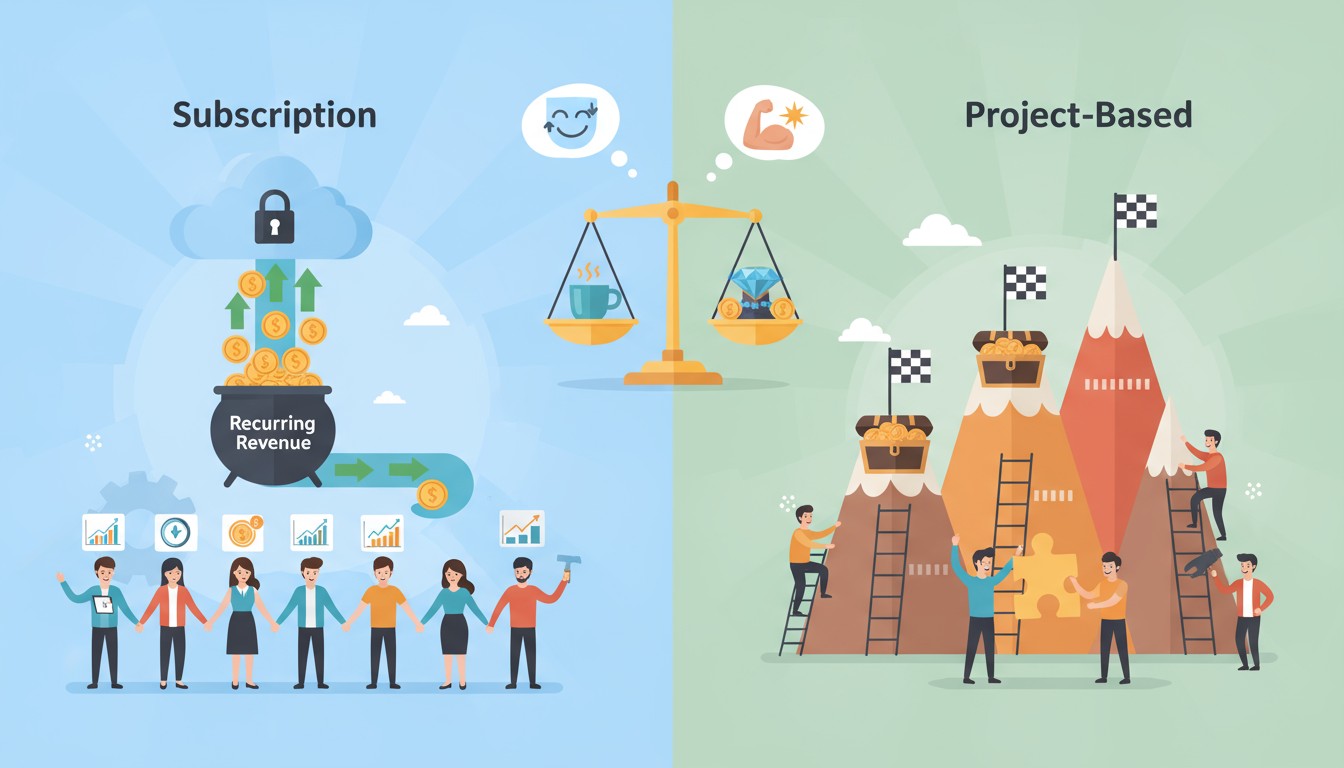
When you examine how successful professional service providers structure their revenue models in 2025, you discover passionate advocates for both subscription-based retainers and traditional project-based billing, each camp claiming their chosen model provides superior business sustainability, client satisfaction, and professional satisfaction compared to the alternative approach that they believe creates unnecessary complexity or misaligns incentives in ways that undermine practice health. This debate has intensified as subscription models proliferated across software and services industries, creating client expectations that professional services should similarly offer predictable ongoing relationships rather than episodic project engagements, while simultaneously many clients remain more comfortable purchasing discrete projects with clear deliverables and defined endpoints rather than committing to open-ended subscriptions whose value they struggle to assess without tangible milestones marking progress toward specific outcomes.
Let me guide you through understanding what each revenue model actually delivers in practice beyond the theoretical benefits that advocates claim, how the cash flow mathematics work differently between subscriptions and projects in ways that dramatically affect practice sustainability and growth trajectories, what client situations naturally favor subscription versus project approaches based on their needs and decision-making patterns, what operational complexities each model creates that you must manage effectively for success, and how to make strategic choices about which model suits your practice given your specific capabilities, market positioning, and lifestyle preferences. My goal involves helping you see that this debate contains no universally correct answer but rather requires matching revenue models to your particular circumstances, with many successful practitioners discovering that hybrid approaches combining both subscriptions and projects often provide optimal results by capturing the advantages of each while mitigating their individual limitations.
Understanding What Each Model Actually Delivers
Think about what subscription models fundamentally provide compared to project-based arrangements beyond just the payment structure differences. When clients purchase subscriptions, they are buying ongoing access to your capacity and expertise rather than purchasing specific deliverables, meaning they pay for the assurance that you will be available when they need guidance rather than for predetermined outputs that project scopes specify. This capacity-based model works similarly to insurance where clients pay premiums for protection they hope they never need fully, accepting that in some months they might barely use your services while in other months they might consume substantial time, with the subscription fee averaging these fluctuations rather than billing actual time consumed during each period. The relationship dynamic shifts from transactional procurement of services to genuine partnership where clients view you as an extension of their team rather than as external vendor they engage periodically for discrete needs.
However, project-based models provide different psychological benefits for clients who want clear visibility into what they are purchasing, how much specific outputs will cost, and when engagements will conclude rather than committing to open-ended subscriptions whose value feels ambiguous without tangible deliverables marking progress. When clients hire you for projects, they receive defined scopes specifying exactly what work you will perform, what deliverables they will receive, and what timeline governs completion, creating comfort through predictability even though project billing means they pay nothing during months when they do not need your services despite potentially facing delays accessing your expertise when urgent needs arise if your project pipeline has you fully committed to other clients. Think about how these models appeal to different client personalities, with subscription models attracting clients who value ongoing strategic partnership and who feel comfortable with relationship-based value assessment, while project models appeal to clients who prefer transactional clarity and who want to evaluate service value through concrete deliverables rather than through subjective relationship quality judgments.
The research on recurring revenue models from Harvard Business Review demonstrates that subscription services create approximately three to five times higher customer lifetime value compared to equivalent project-based engagements, because subscription relationships typically persist for years while project relationships often conclude after single engagements without naturally transitioning to additional work unless you actively sell follow-on projects. This lifetime value difference stems partly from reduced sales friction when clients already pay monthly fees rather than requiring new purchase decisions for each engagement, and partly from the relationship continuity that subscriptions create compared to the episodic nature of projects where clients might not contact you for months between engagements, allowing competitors to potentially win their business during gaps when you lack ongoing relationship touchpoints maintaining your visibility and relevance.
Think about what this means for your experience delivering services under each model. Subscription relationships feel more stable because you know these clients will still be paying you next month regardless of whether particular projects are underway, allowing you to invest in the relationship development and strategic thinking that creates genuine partnership rather than feeling pressure to constantly demonstrate tangible progress toward specific deliverables that project clients expect. However, project relationships provide variety and clear accomplishment markers as you complete defined scopes and move on to new challenges, whereas subscription work can feel diffuse without clear endpoints or milestones that provide the satisfaction of completion that projects naturally deliver when you finish defined scopes and receive client approval of deliverables that contracts specified.
The Cash Flow Reality That Numbers Reveal
When you compare subscription and project-based models through actual cash flow analysis rather than through theoretical discussions about business model advantages, you discover substantial differences in how revenue patterns develop over time that dramatically affect practice sustainability during early growth phases and long-term valuation when you eventually sell or exit your practice. Think about what happens during your first year building subscription-based revenue compared to landing several large projects. If you sign four clients at ten thousand dirhams monthly subscription fees, you generate forty thousand dirhams in month one, eighty thousand dirhams by month two as previous clients renew while new clients add incremental revenue, and potentially one hundred twenty thousand dirhams by month three as your subscription base continues building through new client additions that compound with existing recurring revenue rather than replacing concluded project revenue the way project-based models operate.
However, project-based revenue follows completely different patterns where landing a sixty-thousand-dirham project creates immediate cash infusion but then requires finding replacement revenue once that project concludes, creating feast-and-famine cycles where some months generate substantial revenue while other months produce minimal income as you search for new projects to fill your pipeline. When you complete a major project in month one generating sixty thousand dirhams, then experience two months of minimal revenue while pursuing new business, then land another fifty-thousand-dirham project in month four, your quarterly revenue might total similar amounts as subscription models but the monthly volatility creates stress and makes planning difficult compared to the predictable subscription revenue that arrives regardless of whether you win new business during particular months because existing clients continue paying as long as you maintain relationship quality justifying their ongoing investment.
The compounding effect of subscription revenue becomes particularly powerful once you achieve sufficient base that new subscriptions represent additions rather than replacements for your entire revenue, because at that point your business naturally grows even with modest new client acquisition since existing subscription revenue persists while new subscriptions add incrementally. Think about what happens once you reach twenty subscription clients paying an average of eight thousand dirhams monthly. Your base revenue of one hundred sixty thousand dirhams monthly means that even without adding any new clients, you maintain stable income, while each new subscription adds pure incremental growth rather than just replacing concluded project revenue. This dynamic explains why subscription businesses often show exponential growth curves while project-based businesses show linear growth patterns, because subscription revenue compounds through retained clients plus new additions while project revenue simply reflects whatever new projects you close during each period without the compounding benefit of retained revenue from previous clients automatically renewing.
The valuation implications matter enormously if you eventually want to sell your practice, because businesses with recurring revenue typically sell for three to five times higher multiples compared to project-based practices with equivalent profitability. The insights from Inc. on business valuation show that subscription businesses might sell for five to eight times annual recurring revenue while project-based consultancies typically sell for one to two times annual profit, meaning that even with equivalent earnings, subscription practices command dramatically higher sale prices because buyers pay premiums for the predictable revenue streams that subscriptions provide compared to the uncertain future cash flows that project pipelines represent where revenue must be continuously regenerated through winning new business rather than automatically renewing from retained clients.
Client Situations That Favor Each Approach
While subscription models provide attractive business advantages for providers, recognizing which client situations naturally favor subscriptions versus projects helps you propose appropriate models rather than forcing single approaches onto all clients regardless of fit. Think about what characteristics make clients ideal subscription candidates compared to those better served through project engagements. Clients with ongoing strategic needs requiring continuous access to expertise naturally benefit from subscriptions because they face regular decisions where your input provides value, making monthly fees justified through the assurance that you will be available whenever questions arise rather than forcing them to schedule discrete projects for guidance they need continuously. When clients operate in dynamic markets requiring constant strategic adjustment, when they implement major transformations needing sustained support over extended periods, or when they simply value having trusted advisors they can consult freely without worrying about billable hours, subscription models align perfectly with their needs.
However, clients facing discrete problems with clear endpoints often prefer project arrangements because they want specific deliverables addressing particular challenges rather than open-ended advisory relationships whose value feels ambiguous without concrete outputs. When clients need website redesigns, process improvement initiatives, or any other bounded work with definable completion criteria, project structures provide the clarity they value through specifying exactly what they will receive, what timeline governs delivery, and what investment the work requires rather than asking them to commit to subscriptions where they might underutilize your services during months when they lack immediate needs despite continuing to pay monthly fees. Think about how budget approval processes affect model preference, because many organizations find securing approval for specific projects with clear ROI far easier than justifying ongoing subscription expenses that might appear as overhead rather than as investments in discrete value-creating initiatives.
The hybrid opportunities that combine both models often provide optimal solutions by offering subscription-based strategic advisory augmented with project-based implementation work when clients need execution support beyond the advisory capacity that subscriptions cover. When you provide monthly strategic guidance through subscription retainers, then propose discrete implementation projects when clients decide to execute initiatives that require more intensive support than retainers contemplate, you create natural upsell paths while maintaining subscription revenue stability rather than forcing clients to choose between ongoing advisory access and project-based implementation support as if these represented incompatible alternatives. The research from McKinsey on customer engagement models demonstrates that hybrid approaches combining recurring revenue with transactional project revenue often generate twenty to thirty percent higher lifetime value compared to pure subscription or pure project models, because the combination captures subscription stability while allowing revenue expansion through projects addressing needs exceeding subscription scope.
Think about how to identify during sales conversations which model suits particular prospects based on their expressed needs and decision patterns. When prospects describe ongoing challenges requiring continuous attention, when they emphasize relationship over deliverables, or when they explicitly seek strategic partners rather than project vendors, these signals indicate subscription readiness. However, when prospects focus intensely on specific deliverables, when they express concerns about committing to ongoing expenses, or when their organizational procurement processes favor discrete purchases over continuing services, project structures better match their expectations and buying behaviors. Rather than attempting to convert project-oriented prospects to subscriptions through persuasion that feels like you are changing their minds about what they want, simply offer the model that aligns with their natural preferences while maintaining the option to transition to subscriptions later once project work demonstrates value that justifies ongoing relationships.
The Operational Complexity Each Model Creates
Beyond just revenue patterns and client fit considerations, understanding the operational challenges that subscription and project models create helps you choose approaches matching your management capabilities and tolerance for different types of complexity. Think about what managing subscription clients involves compared to project delivery. Subscription models require careful capacity management because you must ensure adequate availability for all retained clients without knowing precisely when they will need support or how much time they will consume during particular periods, creating the risk that multiple clients might simultaneously need substantial assistance overwhelming your capacity despite none individually exceeding reasonable service expectations. When you retain twenty clients at ten hours monthly capacity each, theoretically you need two hundred hours monthly capacity, but practical reality involves some months where clients collectively need only one hundred hours while other months they might need three hundred hours creating capacity crunches despite your average utilization remaining sustainable across longer periods.
The service scope creep inherent in subscription models represents another operational challenge because clients paying fixed monthly fees naturally push boundaries about what falls within subscription coverage versus what requires additional project fees, creating constant negotiations about whether particular requests exceed retainer scope or represent legitimate uses of capacity they already purchased. When subscription agreements specify that clients receive ten hours monthly support, any request exceeding ten hours clearly requires additional payment, but when subscriptions promise ongoing strategic advisory or unlimited email support without specific hour limits, determining what constitutes reasonable use versus excessive demands becomes subjective judgment creating potential friction when you attempt to establish boundaries that clients feel violate the unlimited access they believed subscriptions provided. Think about how this differs from project models where scope gets defined precisely upfront, making it far easier to identify when client requests exceed contracted work and require change orders before proceeding.
However, project models create their own operational complexities through requiring constant pipeline management ensuring you have sufficient upcoming projects to maintain utilization without gaps between concluded and new engagements. When projects last three months on average, you must continuously sell new work starting at least three months before current project inventory depletes, creating perpetual pressure to develop new business even when fully utilized with current projects because the sales cycle means opportunities you cultivate today will not generate revenue for months. The feast-or-famine dynamics where you sometimes face too much work and other times lack sufficient projects to maintain full utilization creates stress and makes capacity planning difficult compared to subscription models where retained clients provide base utilization that new subscriptions supplement rather than replace. The guidance from Forbes on subscription business challenges emphasizes that while subscriptions reduce pipeline anxiety, they create different management challenges around capacity allocation and service scope governance that require different skills compared to project management capabilities.
Think about which operational complexity you find more manageable based on your natural strengths and preferences. If you excel at relationship management, comfortable with ambiguity around scope boundaries, and prefer stable ongoing work over constant variety, subscription models probably suit your operational style despite the capacity management and scope governance challenges they create. However, if you prefer clear deliverable specifications, enjoy the variety that different projects provide, and feel energized by sales activities required for continuous pipeline development, project models align better with your working preferences despite the revenue volatility and constant business development they demand. Neither model is inherently easier to operate successfully, but they require different operational capabilities and create different stress patterns that affect whether you find the work sustainable and enjoyable over the long term beyond just financial performance considerations.
Making the Strategic Choice for Your Practice
When you face decisions about which revenue model to adopt or whether to transition from your current approach to alternative structures, the choice should reflect your specific circumstances including your financial needs, lifestyle preferences, client base characteristics, and operational strengths rather than just following general advice about which model provides superior business performance. Think about what matters most to you professionally beyond just maximizing revenue or practice valuation. If financial predictability that allows confident personal planning represents your highest priority, subscription models provide the stability supporting that goal through recurring revenue that you can rely on monthly. However, if intellectual variety and clear completion satisfaction matter more than stability, project models deliver those experiences through diverse engagements with natural endpoints providing accomplishment feelings that subscription work sometimes lacks when days blur together without clear milestones marking progress.
The lifestyle implications deserve serious consideration because subscription models typically enable more predictable schedules since retained clients rarely create the urgency that project deadlines impose, allowing you to structure work rhythms around personal preferences rather than around client timelines dictating when intensive work periods occur. When you maintain subscription relationships without concurrent project deadlines creating time pressure, you can often work reasonable hours and take vacations without the guilt that project commitments create when clients depend on you for time-sensitive deliverables. However, some professionals find subscription work less energizing than projects precisely because the lack of deadlines and clear completion points makes work feel diffuse without the focus and intensity that project urgency creates, suggesting that the optimal model depends on whether you thrive on deadline pressure or prefer more measured paces without the stress that time-sensitive deliverables impose.
Think about how to test revenue model changes before fully committing through gradual transitions that allow you to experience both approaches rather than making wholesale changes that would be difficult to reverse if the new model proves less suitable than you anticipated. When you currently operate project-based, you might offer subscription options to selected existing clients who express interest in ongoing relationships, allowing you to develop subscription management capabilities while maintaining project revenue that sustains you financially during the transition period before subscriptions reach sufficient scale to provide adequate income. Similarly, subscription-focused practitioners can selectively accept project engagements testing whether the variety and clear deliverables that projects provide create satisfaction justifying increased revenue volatility that project work would reintroduce compared to pure subscription stability. The insights from Entrepreneur on business model selection suggest that most successful practices eventually develop hybrid models combining both subscription and project revenue rather than choosing exclusively one approach, because the combination provides both stability from retained revenue and growth from project expansions addressing client needs exceeding subscription scope.
The permission to evolve your revenue model as your practice matures and as your personal priorities shift deserves emphasis, because the optimal model for early-career professionals building initial client bases differs substantially from what serves established practitioners with strong reputations and full calendars. When you are establishing your practice, project-based models might provide better learning through exposure to diverse challenges across many clients, while subscription models become more attractive once you have sufficient reputation that retained clients provide adequate revenue without requiring you to constantly chase new projects. Think about revenue models as strategic choices you revisit periodically rather than as permanent commitments defining your practice forever, because what works optimally during one life stage or market condition might become less suitable as circumstances change through business maturity, shifting client expectations, or evolving personal priorities around income stability versus intellectual variety that different revenue models deliver.
Building the Revenue Model That Serves Your Goals
The subscription versus project-based revenue model debate we explored reveals that neither approach provides universally superior solution but rather each offers distinct advantages matching different client needs, operational preferences, and lifestyle priorities. Subscription models deliver the financial predictability through recurring revenue that compounds as you retain clients while adding new subscriptions, creating stability and higher business valuations that exit strategies reward substantially. However, project models provide intellectual variety through diverse engagements, clear accomplishment satisfaction from completing defined deliverables, and potentially larger cash infusions when you land substantial projects, making them appealing despite revenue volatility that subscription advocates criticize.
The reality involves recognizing that hybrid approaches combining both models often prove optimal by capturing subscription stability through retained strategic advisory relationships while allowing project-based growth when clients need implementation support exceeding retainer scope, creating revenue models that provide both the predictability supporting confident planning and the growth opportunities that projects enable when clients expand their use of your services beyond ongoing advisory into execution assistance. You deserve to build revenue models matching your authentic preferences around stability versus variety, your operational strengths around relationship management versus project delivery, and your client base characteristics around ongoing needs versus discrete problems, rather than forcing yourself into models that thought leaders recommend despite those models conflicting with what actually makes your practice sustainable and satisfying over the long term. Give yourself permission to experiment with both approaches, to develop hybrid models capturing advantages of each, and to evolve your revenue structure as your practice matures and your priorities shift, because the best revenue model is ultimately whichever allows you to serve clients excellently while maintaining the lifestyle and income stability that your personal circumstances require.